Media and Sports Final Analysis

Mass media has played a strong role and has continued to develop the sports communication industry. The birth of new forms of sports media as a result of demassification of radio and newspaper into new mediums such as the internet, social media, and television has advanced sports communication. Vivian’s term of demassification has taken place as the purpose of sports radio, television, and print revolutionizing the meaning from simply announcing facts to debates and personal opinions, as well as transforming radio into podcast, books into television, and print news into internet news. Additionally, other forms of media have had to converge with new and existing outlets in order to remain prominent in the sports media world.

Books and magazines are still being printed, however, just like most of the different media platforms, print media has converged with the Internet to survive. Most newspapers, magazines, and books can now be found online on their corresponding websites. Furthermore, sports radio has thus converged with the internet and technology, which as a result, has decreased the prominence of radio in the sports communication social-media-sports-680  industry. Many mediums of mass communication had to converge to the internet’s new field of sports marketing. Social media has adopted many aspects of sports media found in different mediums, such as streaming and biographies, that has not killed other industries. Convergence has led to each of these mediums furthering their sports communication through different means. The internet also opened up new ways for sports teams and brands to market to their customers with the creation of things like fantasy football as online gambling.  Lastly, thanks to convergence, radio is more accessible for people on tablets, phones, and even “Smart” televisions.
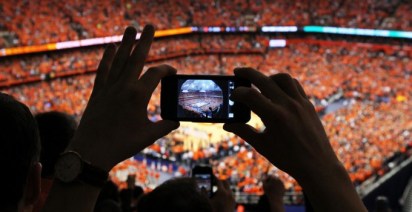
Television has not only played an important role in the convergence of sports media, but also in the expansion of sports. Television created a whole new enterprise of sports franchises, as well as a new platform of advertisement. Not only did television help sports teams as a whole, it allowed athletes to become a brand individually. Athletes have been able to use social media as a platform to build their own brand as well as foundations and post sports careers.

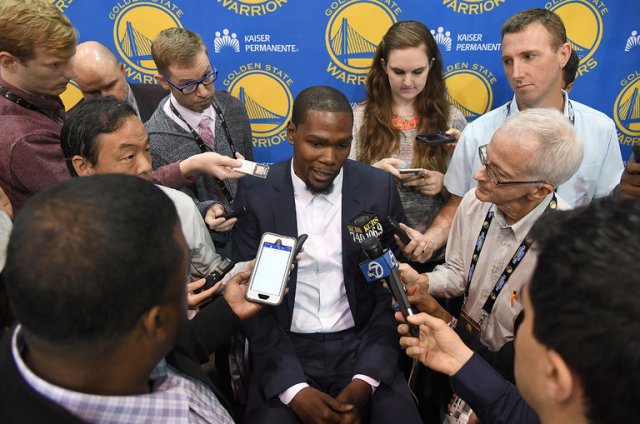
Endorsements gave athletes the opportunity to expand their careers further than just on the field. Advertisement has had an enormous impact on not just television, but social media in regards to pushing a message and influencing an audience.
59a4c3a024000039004ba30b

Specific athletes, teams, and corporations can, to some degree, control the opinion of sports news, leading to a more concrete number of dedicated readers and listeners that agree with the same opinions as the sponsors. Lazarsfeld‘s Two- Step flow model can be explained through the audiences dependence on athletic opinion leaders (Colin Kaepernick, Tim Tebow, Jerry Jones, etc.) and their acceptance of the opinion leader’s stances on a plethora of topics. Athletes have long held a heavy influence over those who look up to them as opinion leaders, thus, every action can be influential.  

In conclusion, all mass media mediums have adapted strategies in furthering their own industry in regards to sport communication. Convergence has given these industries the opportunity to transform sports in to a fast pace, on the go form of entertainment without losing the valuable aspects that old media continues to offer. Additionally, the two step flow model has impacted all mediums of sports communication, as athletes, coaches, and teams have become opinion leaders for those that follow them, which has resulted in heavy surveillance over many of their actions. Mass media communication has, and will continue, to develop and advance the sports industry into being one of the most prominent and advanced forms of entertainment.

Sources:

Blog Post – Two Step Flow Model

Blog Post- Demassification and Debates
SheKnows Entertainment


Twitter: STRIKE THREE

It’s easy to think social media is all fun and games. Posting cool pictures on Instagram or having twitter conversations with your friends seems all fine and innocent, right? Wrong. Anything and everything that is posted on social media is there for good and can come back to bite you in the backside if you aren’t careful because of the increased surveillance that technology has introduced. This is especially true for professional athletes. Whether or not it was posted when they were in middle school or if it was posted and immediately deleted, someone has record of it.

Jean M. Twenge addresses in her book called IGen the racial inequalities that are so prevalent in colleges and presents statistics that show the increase in those who believe colleges should prohibit racist or sexist speech. Society has drastically changed in these terms from when many professional athletes today were younger. As a result, many athletes have had tweets resurface that include discriminatory or derogatory language and have faces repercussions.

Two Major League Baseball players, Trea Turner and Sean Newcomb, were required to make public apologies regarding their racist and homophobic tweets from their past. Many athletes careers have been at risk due to the resurfacing of old activity on social media. Slanderous and demeaning language has put athletes careers at high stakes. Despite the changing society we live in, the resurfacing of old content has ruined athletics for many. Athletes have been condemned and shamed for what they said over 10 years ago.

twitter baseball.jpgThe issue of old tweets has come so far as in becoming a political issue. Due to the progressivism our society has experienced, what seems to have been minuscule years ago is not acceptable language. In fact, in 2018, Rep. Joseph Crowley introduced a bill ton Congress congratulating a former athlete for her contributions towards advancing equal rights for he LGBTQ community in athletics. Support of minorities who were targeted via old tweets needed support in the athletic community and former athletes, as well as Congress, recognized that. This form of government support is what will help continue our country to advance.

This issue is not only an prevalent in the MLB but sports industries across that spectrum. Though the controversy of whether or not athletes should be condemned for what they said years ago still lies, we have to learn and move forward as a society in understanding what we say now on social media can, and will, influence our future.


Sources:

The Hill

GovTrack

Jean M Twenge: IGen

MSN – Sports Illustrated Video


Live Stream via Social Media: SLAM DUNK

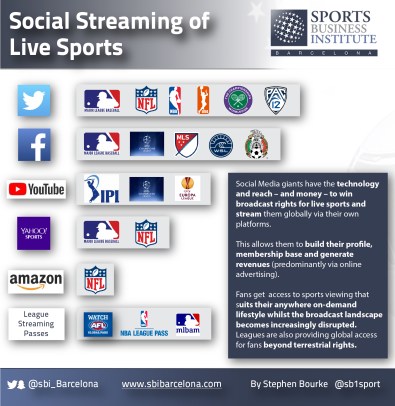
As you have previously read a post about how the internet has transformed sports through streaming, I am going to dive a little further in to how social media specifically has furthered this sports transformation. Before streaming you could only access sports in two places: at the event itself or in front of a television. With the creation of internet, streaming has come about and likewise, the rise of social media has enhanced this process. The graphic below by Sports Business Institute  shows us how two social media sites are the front runners for streaming live sports. 

Social Streaming of Live Sports_Dec 2017-01(3).jpg
Facebook and Twitter are two social media sites that have the highest acclaim in live streaming sports. This helps them generate revenue through subscriptions and advertising.

Facebook and Twitter have both recently begun offering sports streaming and it has taken off wildly. Bold Worldwide, an agency that focusses on social and digital media, blogged “While older generations may prefer watching sports on TV out of habit, evidence points to younger generations ditching TV for online streaming broadcasts.” For Facebook and Twitter to decide to join the sports streaming game they had to take the time to first, recognize who their audience was. Social media’s purpose is more than just community building, but it is widely used for information and entertainment as well. Capturing their young audience via sports streaming is just another way that social media’s functionality has expanded.

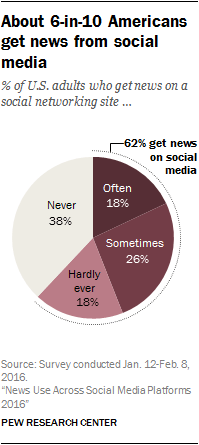
PJ_2016.05.26_social-media-and-news_0-01
2016 Pew Research Study

Demassification has largely enhanced this process. A survey done by Pew Research Center revealed that 6 in 10 Americans get their news from social media. This statistic includes news regarding sports and will only continue to increase with the rise of social media streaming. People have such easy access to news on the go, and as a result, watching sports has taken major steps forward. Convergence allows people to watch games on their phone in an easily accessible social media app anywhere they go. 

In John Vivian’s book The Media of Mass Communication he addresses the two-way communication that social media offers. This idea in itself has impacted the sports industry in more ways that one, in terms of social media sports streaming. Primarily, fans can communicate with each other, during the game, even if they are hundreds of miles apart. Fans can watch a game and read a live feed of others who are making commentary on the plays all while streaming it off of a social media app. This allows people across countries to connect over a common bond, their sports team.

The benefits of streaming sports on social media will continue to influence the sports world for years to come. For now, you can thank demassification for allowing this to be possible. Enjoy your games!

Sources:

Sports Business Institute

Bold Worldwide

Pew Research Center

John Vivian’s The Media of Mass Communication


Social Media: A Huge SCORE for Sports Fans?

Social media. We all have it, and if you don’t, you likely know what is constantly happening on Instagram or twitter from different news and conversations that you hear. Social media has completely transformed the world of athletics. With so many athletes having a presence on different social media platforms, a new sense of community building has arisen between athletes and their fans.

Fans are able to follow their favorite athletes to stay up to date on not only what is going on in their professional life but their personal life too. Tim Tebow (on of my all time football favs) has been able to use twitter as a medium to connect with his fans and build a successful foundation. The Tim Tebow foundation has taken off due to his drive to help others but also because of the relationships he was able to form with people outside of the sports world on social media.

Not only are the connections he made with fans on social media allowing for the successes of his foundation, but the subscriptions and donations that fans take part in have also advanced his foundation. Tim Tebow is able to use twitter as a platform to serve as a personal role model rather than simply an athletic role model. 

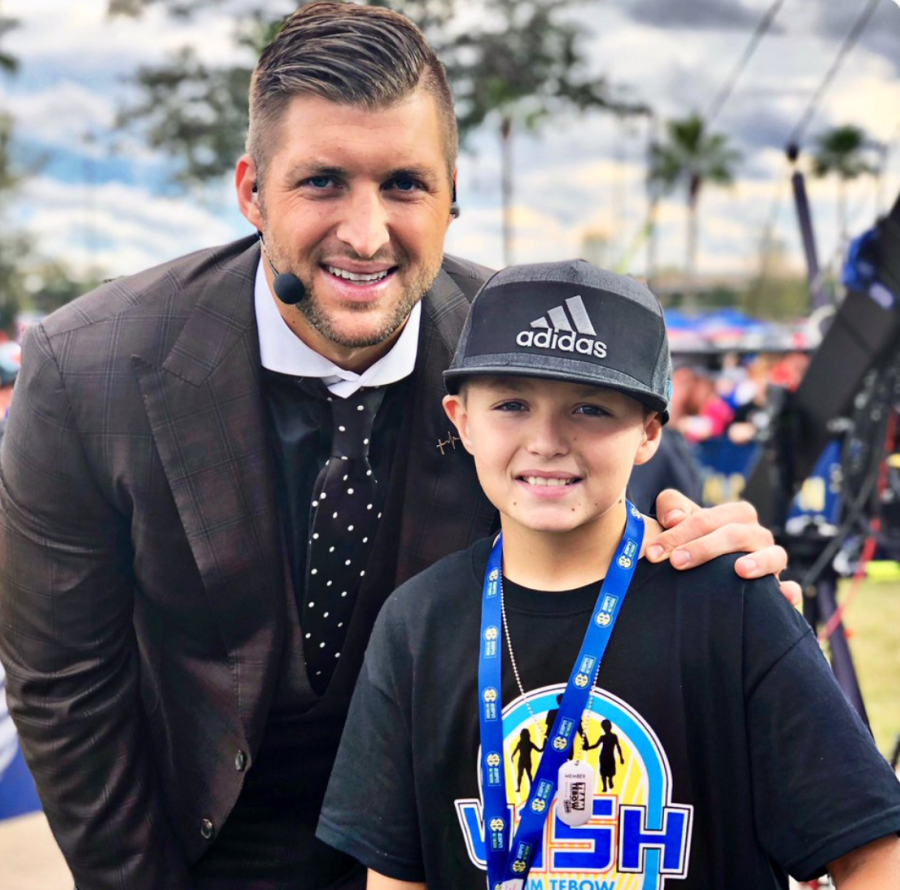
Screen Shot 2018-11-01 at 8.31.40 AM.png
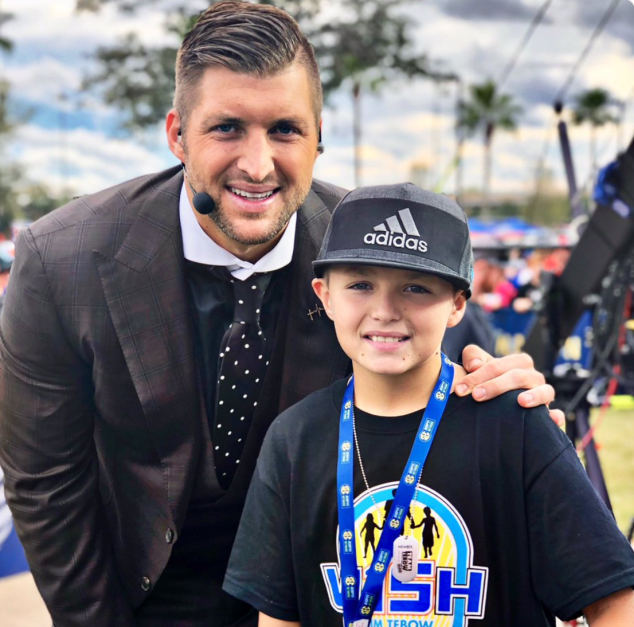
Tim Tebow and Levi in a tweet by Tebow on October 28 about his foundation.

The photo you see on the right, Tim Tebow posted on his twitter in a tweet about his foundation. His publicity on social media allows his foundation to reach fans who are eager to connect with him as more than just an athletic role model. Hundreds of people are able to view and respond to the tweet which allows for a more personalized relationship that is otherwise not possible. Relationship and community building as a result of social media has been an asset for Tim Tebow as well as athletes across the country.

Though it is easy for us to see all of the wonderful attributes social media provides for athletes in accordance with connecting with fans, the issues that come along with social media often go unnoticed. In an article published by Bleacher Report, they address the positives and negatives that come with athletes being present on social media. In a positive light, social media allow fans to personally connect with athletes. This not only benefits the fans but the athletes too, as we have seen in Tim Tebow’s case.  Social media humanizes athletes who, without, we would only see them as sitting on a pedestal. 

Connecting with athletes…who doesn’t love that?? It gives fans a sense of companionship to people they could otherwise not reach, but often times fans fail to recognize how these athletes are negatively affected by their social media presence. An article posted by Psychology Today addresses how the media can hurt an athlete.

390-auburn-1201.jpg
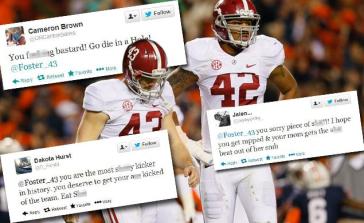
Cade Foster misses 3 field goals in Alabama v Auburn football game 2013. He received death threats on social media.

Fans can use their monitor as a screen to cover up who they are so they are more confident in posting hurtful comments. When fans target athletes with controversial comments, it often results in the spiral of silence to where minority opinions are lost. As a result, athletes cannot always notice the support of other fans behind them. In 2013, an Alabama football kicker was targeted on twitter with death threats because fans believed he was the reason the team lost the game. All of these hateful comments silenced those who supported him, leaving the kicker feeling blamed for the loss and hated. When fans have such easy access to communicate with athletes, it is crucial they consider other people’s feelings before posting.

Not only can a fan’s usage of social media to connect with athletes hurt the player, but players can hurt their own reputation by their own posts as well. Stay tuned for more on how an athlete can ruin their own reputation on social media in the later weeks!

Sources:

Bleacher Report

Tim Tebow Foundation

Psychology Today

Bleacher Report 2

About

Welcome to our site! Here we will be analyzing how sports are portrayed through different media outlets and their influence on society.

Van Herring – I am a junior Religion and Communication double major. I play on the Furman Ultimate Club team. My blogging will focus on the relationship between sports and the internet.

Grayson Atkins- I am a sophomore Communication major with a focus in business. I am the kicker and punter on the Furman Football Team. I will be blogging about the relationship between sport and print media.

Noah Trotter- I am a senior at Furman University. I am a communication major double minoring in Film Studies and African and African American Diaspora Cultures. My favorite sport is Golf but no matter what, the Lakers have her heart. I will be addressing the relationship between sports and the radio.

Hannah Page Clayton – I am a junior Political Science and Communication double major. I am a member of Alpha Delta Pi sorority and Residential Life Council. I will be analyzing the relationship between sports coverage and social media.

Robbie Betchley – I am a junior Communication major. I am also a student coach on the men’s lacrosse team. I will be looking into the relationship between sports media and television.

“I think sports media really do need to think about the world in more humble terms” -Tim Tebow