
Mass media has played a strong role and has continued to develop the sports communication industry. The birth of new forms of sports media as a result of demassification of radio and newspaper into new mediums such as the internet, social media, and television has advanced sports communication. Vivian’s term of demassification has taken place as the purpose of sports radio, television, and print revolutionizing the meaning from simply announcing facts to debates and personal opinions, as well as transforming radio into podcast, books into television, and print news into internet news. Additionally, other forms of media have had to converge with new and existing outlets in order to remain prominent in the sports media world.
Books and magazines are still being printed, however, just like most of the different media platforms, print media has converged with the Internet to survive. Most newspapers, magazines, and books can now be found online on their corresponding websites. Furthermore, sports radio has thus converged with the internet and technology, which as a result, has decreased the prominence of radio in the sports communication 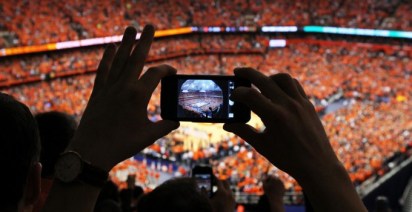 industry. Many mediums of mass communication had to converge to the internet’s new field of sports marketing. Social media has adopted many aspects of sports media found in different mediums, such as streaming and biographies, that has not killed other industries. Convergence has led to each of these mediums furthering their sports communication through different means. The internet also opened up new ways for sports teams and brands to market to their customers with the creation of things like fantasy football as online gambling. Lastly, thanks to convergence, radio is more accessible for people on tablets, phones, and even “Smart” televisions.
Television has not only played an important role in the convergence of sports media, but also in the expansion of sports. Television created a whole new enterprise of sports franchises, as well as a new platform of advertisement. Not only did television help sports teams as a whole, it allowed athletes to become a brand individually. Athletes have been able to use social media as a platform to build their own brand as well as foundations and post sports careers.
Endorsements gave athletes the opportunity to expand their careers further than just on the field. Advertisement has had an enormous impact on not just television, but social media in regards to pushing a message and influencing an audience.
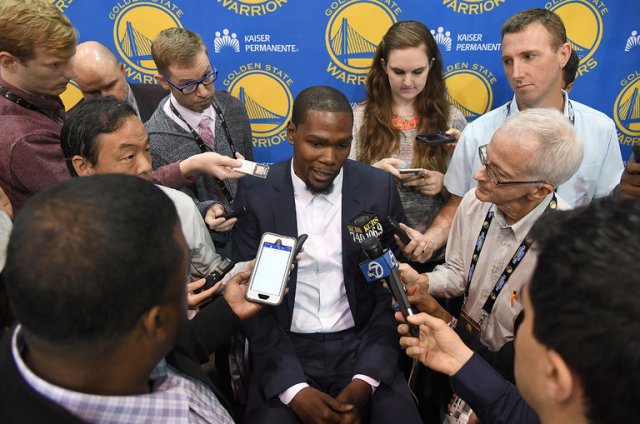
Specific athletes, teams, and corporations can, to some degree, control the opinion of sports news, leading to a more concrete number of dedicated readers and listeners that agree with the same opinions as the sponsors. Lazarsfeld‘s Two- Step flow model can be explained through the audiences dependence on athletic opinion leaders (Colin Kaepernick, Tim Tebow, Jerry Jones, etc.) and their acceptance of the opinion leader’s stances on a plethora of topics. Athletes have long held a heavy influence over those who look up to them as opinion leaders, thus, every action can be influential.
In conclusion, all mass media mediums have adapted strategies in furthering their own industry in regards to sport communication. Convergence has given these industries the opportunity to transform sports in to a fast pace, on the go form of entertainment without losing the valuable aspects that old media continues to offer. Additionally, the two step flow model has impacted all mediums of sports communication, as athletes, coaches, and teams have become opinion leaders for those that follow them, which has resulted in heavy surveillance over many of their actions. Mass media communication has, and will continue, to develop and advance the sports industry into being one of the most prominent and advanced forms of entertainment.
Sources:
Blog Post – Two Step Flow Model
Blog Post- Demassification and Debates
 Fantasy Sports are a major industry spin-off of regular athletic events. It is estimated that 21% of Americans participate in some sort of fantasy sport. The Dark side of Fantasy football as
  Media and Sports