
Demassification and Debates

Once radio became a medium through which sports could be broadcasted, it created what we would call “a new concept of community”. Sports radio brings people together and allows them to imagine participating in the event from home, work, or walking to the next destination.

Speaking of being on the go, advancements in technology have led to the term from John Vivian that used in my last post called “Convergence”, giving people the ability to access multiple outlets and utilize multiple mediums on one device. Convergence has increased people’s ability to access radio, music and video on the go.

DanPatrick4
Courtesy of AthlonSports.com

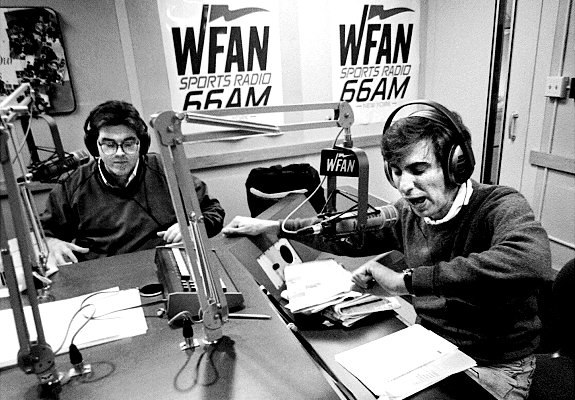
In addition to a change in technology, there has been a change or spread in the purpose of sports radio.  It has evolved  in that its more than just facts and stats. Sports radio now has sports talk shows like, The Stephen A Smith Radio Show, The Herd with Colin Cowherd, and The Dan Patrick Show. Sports talk podcasts have come about too, such as The First Take with Stephen A Smith and Max Kellerman and Pardon the Interruption by Tony Kornheiser and Michael Wilbon.

Show hosts can debate on social issues, fiscal strategy, and more. Thanks to podcasts, some of their favorite shows or topics can also be accessed on demand. Shows are also more interactive now, allowing listeners to call in and give their input.

Both changes are taking place in the spirit of demassification, fragmenting the audience into niches (sports announcing/sports talk & debates and radio/podcast). They also each create new communities inside the circle or community of sports enthusiasts and/or listeners already created. Listeners can now choose whether or not they want to listen to the game or talk about the team.  Whether or not they have the time to tune-in to and participate in the discussion now, or will just download the episode and hear the show hosts’ opinions later places them in a niche.

Here is a video of Stephen A. Smith’s  recording one of the latest podcast episodes on The First Take:

Once again, we see the evolution of sports in this post, but in a different way than before thanks to the Journal of Sport and Social Issues. Technology and its advancements are obvious, but the slow change from only announcing games, to debating about a fight that broke out on the court, and the creation of sports podcasts has yet to be discussed in great detail. Which do you prefer?  Radio or Podcasts?  Announcing or Debating ? Let me know below!

Sources:

Books:

The Media of Mass Communication by John Vivian, 12thEd.

Journals:

CALL AND RESPONSE: Sports, Talk Radio, and the Death of Democracy

Cool as the Other Side of the Pillow: How ESPN’s SportsCenter Has Changed Television Sports Talk

Podcasts:

The First Take

Pardon the Interruption

Radio Shows:

The Dan Patrick Show

The Herd

The Stephen A Smith Radio Show
 

Social Media: A Huge SCORE for Sports Fans?

Social media. We all have it, and if you don’t, you likely know what is constantly happening on Instagram or twitter from different news and conversations that you hear. Social media has completely transformed the world of athletics. With so many athletes having a presence on different social media platforms, a new sense of community building has arisen between athletes and their fans.

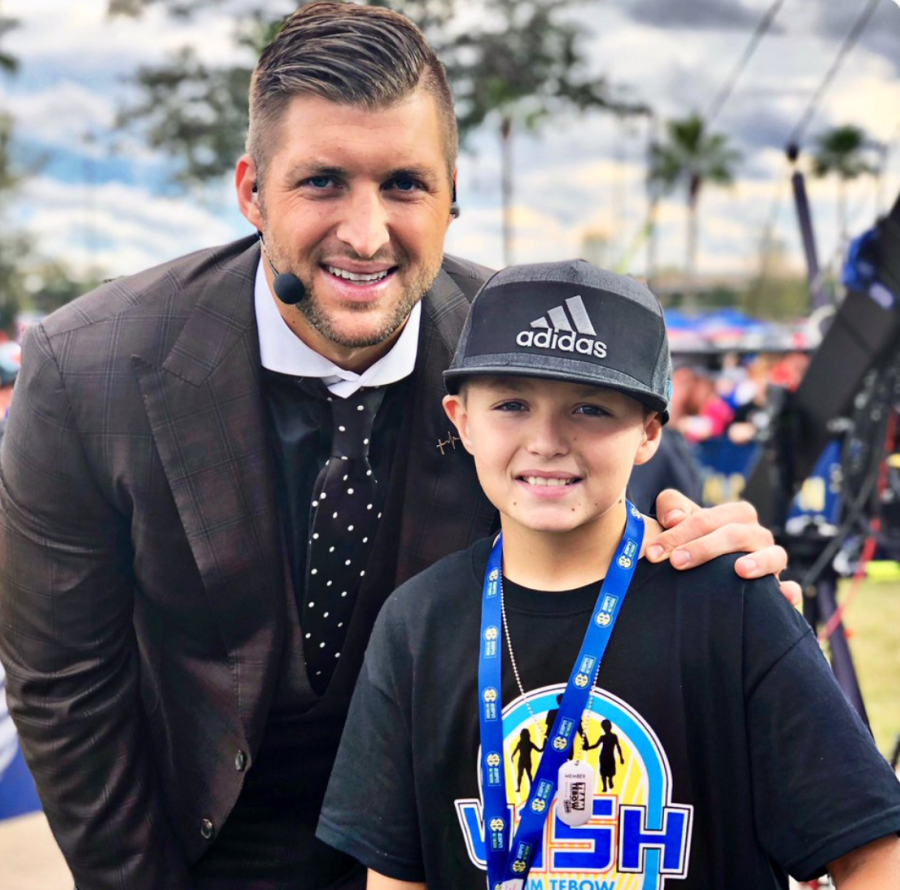
Fans are able to follow their favorite athletes to stay up to date on not only what is going on in their professional life but their personal life too. Tim Tebow (on of my all time football favs) has been able to use twitter as a medium to connect with his fans and build a successful foundation. The Tim Tebow foundation has taken off due to his drive to help others but also because of the relationships he was able to form with people outside of the sports world on social media.

Not only are the connections he made with fans on social media allowing for the successes of his foundation, but the subscriptions and donations that fans take part in have also advanced his foundation. Tim Tebow is able to use twitter as a platform to serve as a personal role model rather than simply an athletic role model. 

Screen Shot 2018-11-01 at 8.31.40 AM.png
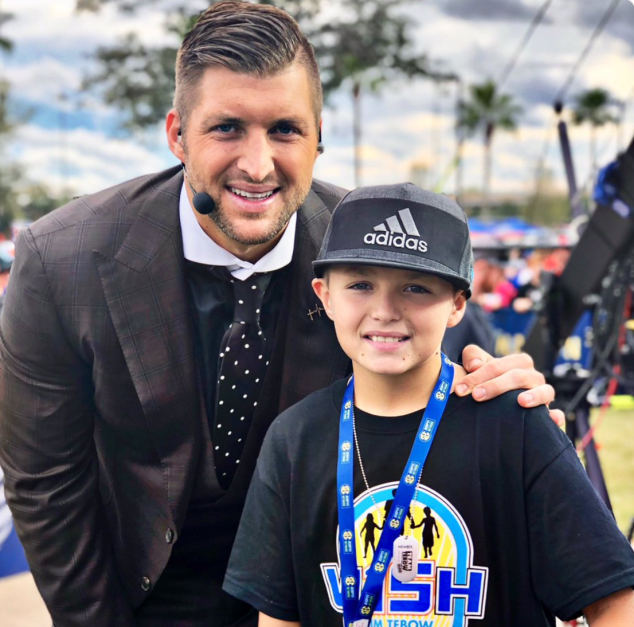
Tim Tebow and Levi in a tweet by Tebow on October 28 about his foundation.

The photo you see on the right, Tim Tebow posted on his twitter in a tweet about his foundation. His publicity on social media allows his foundation to reach fans who are eager to connect with him as more than just an athletic role model. Hundreds of people are able to view and respond to the tweet which allows for a more personalized relationship that is otherwise not possible. Relationship and community building as a result of social media has been an asset for Tim Tebow as well as athletes across the country.

Though it is easy for us to see all of the wonderful attributes social media provides for athletes in accordance with connecting with fans, the issues that come along with social media often go unnoticed. In an article published by Bleacher Report, they address the positives and negatives that come with athletes being present on social media. In a positive light, social media allow fans to personally connect with athletes. This not only benefits the fans but the athletes too, as we have seen in Tim Tebow’s case.  Social media humanizes athletes who, without, we would only see them as sitting on a pedestal. 

Connecting with athletes…who doesn’t love that?? It gives fans a sense of companionship to people they could otherwise not reach, but often times fans fail to recognize how these athletes are negatively affected by their social media presence. An article posted by Psychology Today addresses how the media can hurt an athlete.

390-auburn-1201.jpg
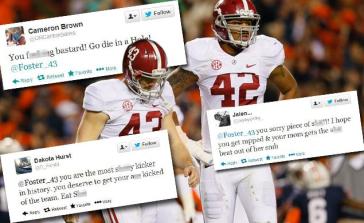
Cade Foster misses 3 field goals in Alabama v Auburn football game 2013. He received death threats on social media.

Fans can use their monitor as a screen to cover up who they are so they are more confident in posting hurtful comments. When fans target athletes with controversial comments, it often results in the spiral of silence to where minority opinions are lost. As a result, athletes cannot always notice the support of other fans behind them. In 2013, an Alabama football kicker was targeted on twitter with death threats because fans believed he was the reason the team lost the game. All of these hateful comments silenced those who supported him, leaving the kicker feeling blamed for the loss and hated. When fans have such easy access to communicate with athletes, it is crucial they consider other people’s feelings before posting.

Not only can a fan’s usage of social media to connect with athletes hurt the player, but players can hurt their own reputation by their own posts as well. Stay tuned for more on how an athlete can ruin their own reputation on social media in the later weeks!

Sources:

Bleacher Report

Tim Tebow Foundation

Psychology Today

Bleacher Report 2

The Impact of Radio on Sports

The year is 1921.  Until now, you have been able to use the radio for hearing election results and peace treaties. All of the sudden you hear of public radio possibly broadcasting sports. You don’t believe it could actually happen until  you tune into a pioneering radio station, hear the announcer’s excitement and feel the energy in the venue of a boxing match through the airwaves.


On the Boardwalk in Asbury Park, NJ, a ‘rolling chair’ offers passers-by a listen to the fight by wireless radio telephone.

“On the Boardwalk in Asbury Park, NJ, a ‘rolling chair’ offers passers-by a listen to the fight by wireless radio telephone.” Courtesy of PopHistoryDig.com


1921 was the first time a large population of listeners were able to gather around their radios and get a play-by-play of every swing, duck, and knockout taking place during the boxing match between  Jack Dempsey and Georges Carpentier.


The station to claim the first public radio sports broadcast was KDKA from Pittsburgh, Pennsylvania. They even broadcasted the first baseball game. In that same year of 1921, the first football game to air on radio was between the University of Pittsburgh and West Virginia University.

Check out this old recording of a sports radio broadcast  featuring announcer Ty Tyson.

Radio’s broadcasting of sports allowed for  listeners to not only join in on the excitement, but paint a picture, revive memories and incite passionate arguments. This technological evolution has gone from radios the size of televisions, to transportable radios, to car and internet radio and, in the spirit of convergence, radio apps. Convergence is a term to describe the combination or availability of multiple mediums, outlets  or operations (news, books, call, Facebook, calculator) on one device.

There are now hundreds of sports radio stations with an entity or company being allowed to own no more than eight radio stations. Government radio stations like NPR even broadcast some sports programming. Not only has the accessibility and topics discussed on the radio expanded/changed, it has gone through demassification (we’ll get into that later) . My father is the perfect example of someone benefiting from the evolution of radio and sports broadcasting. Not only does he watch games on television and discuss them with friends, he listens to sports radio ALL. DAY. Do you benefit too?


Sources:

Brittanica

Baseball Hall of Fame

Vice Magazine

Beer, Babes, and Balls: Masculinity and Sports Talk Radio by David Nylund

Play-by-Play: Radio, Television, and Big-Time College Sport by Ronald Smith

NPR Radio Government Website (Sports Section)

FCC Radio Rules

Sports Marketing 2016-2017. Vol. 17th edition by Richard K. Miller & Associates

Sports in Newspapers

In today’s society that is driven by technology, the print media is slowly fading into anonymity. However, newspapers still play a crucial role for sports fans. The main goal of all newspapers is to inform the public of events around the country, unlike social media and some aspects of television where the main goal is to entertain viewers.

Newspaper 1

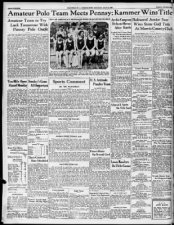
Sports Page from the 1920s

Before the era of sports on television, newspapers were the main way citizens were able to see information on sport events around the country. Thanks to the creation of the penny papers in the early 1800s, newspapers quickly became the main mass media tool because people from all economic classes were able to see the current news, including sports. During the Industrial Revolution and the evolution of the printing press, the quality, quantity and the speed of production significantly increased for newspapers. Newspapers today continue to allow consumers to access information both local and national sports news.

There are several advantages of newspapers over other media platforms like television, radio, the Internet and social media. The first advantage is that newspaper allows citizens to have a physical copy to hold, instead of a quick video highlight of a game or a tweet regarding scores. Another advantage is the in-depth analysis and statistics that are included in newspapers. Sports writers and editors for newspapers give opinions and a thorough recap of the game or match.  A third advantage is that newspapers reach a different audience. According to John Vivian, the main consumers of sports and other information from newspapers are older, more educated and have a higher income compared to consumers of other platforms.

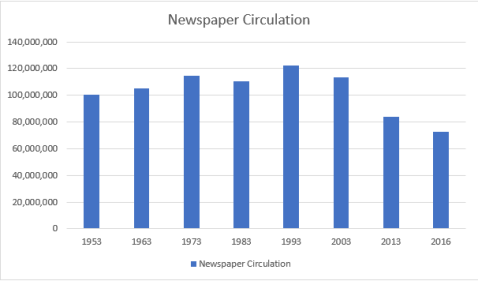
In the past fifteen years, the average newspaper circulation has dramatically dropped for both weekdays and on Sundays, according to the Pew Research Center:

  • 55,185,000 on weekdays and 58,495,000 on Sundays in 2003.
  • 34,657,199 on weekdays and 37,801,888 on Sundays in 2016.

Chart Blog

USA Today
USA Today Sports Page

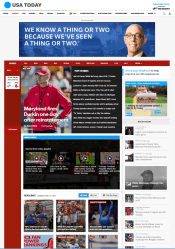
With the decline of newspaper sales, consumers looking for the latest information on sports are turning to online versions of the newspaper, like the sports page in USA Today Sports and social media accounts like the New York Times Sports Twitter page. Another reason for the decline is that newspapers are not up-to-date. Once a newspaper is printed that day, they cannot change the information regarding new breaking news.

So, what is the future of sports in print media, specifically in newspapers? I believe that newspapers will be a main source for sports information among the older generation. However, with the development of technology, newspapers are already on the decline and sports fans can get statistics and live scoring on social media, apps, and the Internet.

For Further Reading:

Pew Research Center

USA Today Sports

Vivian, John. The Media of Mass Communication. 12th ed., Pearson Education Inc., 2017.

Sports and the Rise of Streaming

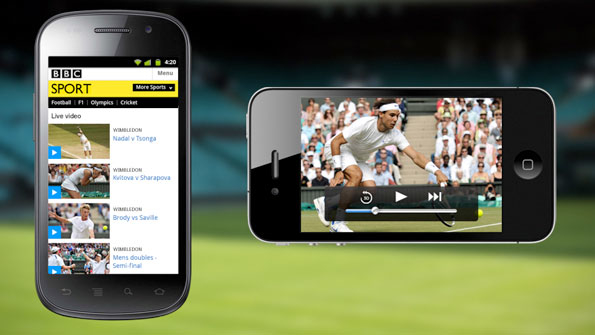
The internet has no doubt changed our society. But what is the industry that has most been affected by the rise of the internet? Sports. The advancement of streaming has made sports more readily available for anyone with a smart phone – anywhere and anytime.

Streaming

Streaming has expanded sports events from being an event that you go to, to taking the sports with you wherever you go. Television cleared a path for the trend of bringing sporting events outside the stadium, but streaming bulldozed the field and brought it literally anywhere with internet access. According to the EFF almost 2/3 of all internet traffic is streaming video, which makes sports streaming a very profitable domain for companies like ESPN.

dims

Streaming Options

There are countless options for fans to engage in watching their favorite sport. One of the biggest companies in sports is ESPN. ESPN is part of one of the biggest media conglomerates overseen by Disney. WatchESPN is one of the most prominent producers in the sports streaming business. You can watch hours of sports on their website or their phone app so you can conveniently take it with you wherever you want. They do charge a fee for subscriptions to different sports for the season in order to make sure you stay hooked, keeping them in business.

Streaming gave rise to a new outreach for fans who simply don’t have to come to a sporting event or gather around the TV on a Sunday to watch the big game. In some aspects streaming has made a way for fans to make their favorite sports conform to their busy schedules. People no longer have to watch a game while it happens live or record it on a VCR. Now, they can watch the game at their convenience – on the bus, at home, or anywhere in between. The number of fans watching sports through cable is dropping – 100 million viewers to 88 million in September of 2018 alone. Streaming, on the other hand, is on the rise.

The NY Times estimates that almost half a million people daily streamed events in the last Olympics. The reason streaming is so popular is because it is convenient and often “free.” While some streaming sites don’t charge a price, they all have advertisements, which keeps the companies in business. Some sites offer no ads in their streaming, but on the condition of a premium membership, which in most cases incurs a fee.

Sources:

FCC: Broadcasting Rules

CNN: Disney and Sports

ESPN Watch

NY Times: How Streaming has Changed Sports

Television and Sports Coverage

tickets and sports

Stadiums vs. Television

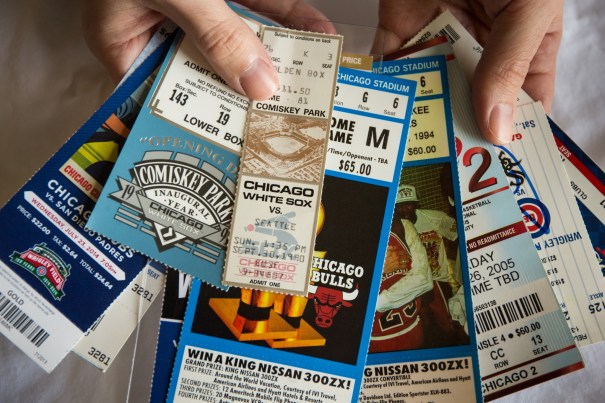
Traditionally, there was one way to watch sporting events. You would buy a ticket and go to the game. Sports coverage over the years has changed tremendously, leading us to the media dependent industry we see today. The rise in Television has influenced the growth of sports allowing sports teams and players to become part of viewers everyday life.

sports tv

Before television, you were either at the game or you heard about what happened through word of mouth. Once television came along, it allowed sports fans to tune into games straight from their home at their own luxury. Ironically with the convergence of sports, it allowed enormous growth. Although this was great for the viewers, it hurt many of the sports franchises that weren’t very good. Instead of going to the stadium to watch your hometown team compete (this use to be your only option to watch sports), television now gave fans the opportunity to watch teams all around the world. Fans now have the ability to watch and cheer for teams from different areas, where in the past, you might not have been a fan of due to the lack of connection to the team. As you can probably guess, this benefited the good teams and hurt the bad teams. Not only did television effect the teams and fans directly, but also the community. “New York Police reported since Monday Night Football came on the air arrest dropped 16%” – VHS Classics. Over all, television and media has had a positive effect on the sports industry. a study from Science Direct states, “our research shows that there is a positive correlation between the respondents participation in digital social networks and new media literacy.”

Commercials

With the emergence of television, also came the emergence of commercials. Marketing Charts states, “an average TV hour is 36% commercials” (Marketing Charts). Advertising and marketing in the sports world clearly plays a huge roll. According to the Sports IllustratedFox was able to charge five million dollars for a thirty second commercial slot for the 2017 Super Bowl (Sports Illustrated). FIVE MILLION DOLLARS! Being a sports fan myself we forget that Sports is not just entertainment, but also a very powerful business. Television opened up a whole new source of revenue in sports, giving everyone involved a platform to make a lot of money while influencing a lot of people.

Sources:

Sports Illustrated

ESPN

Marketing Charts

People

Science Direct

About

Welcome to our site! Here we will be analyzing how sports are portrayed through different media outlets and their influence on society.

Van Herring – I am a junior Religion and Communication double major. I play on the Furman Ultimate Club team. My blogging will focus on the relationship between sports and the internet.

Grayson Atkins- I am a sophomore Communication major with a focus in business. I am the kicker and punter on the Furman Football Team. I will be blogging about the relationship between sport and print media.

Noah Trotter- I am a senior at Furman University. I am a communication major double minoring in Film Studies and African and African American Diaspora Cultures. My favorite sport is Golf but no matter what, the Lakers have her heart. I will be addressing the relationship between sports and the radio.

Hannah Page Clayton – I am a junior Political Science and Communication double major. I am a member of Alpha Delta Pi sorority and Residential Life Council. I will be analyzing the relationship between sports coverage and social media.

Robbie Betchley – I am a junior Communication major. I am also a student coach on the men’s lacrosse team. I will be looking into the relationship between sports media and television.

“I think sports media really do need to think about the world in more humble terms” -Tim Tebow